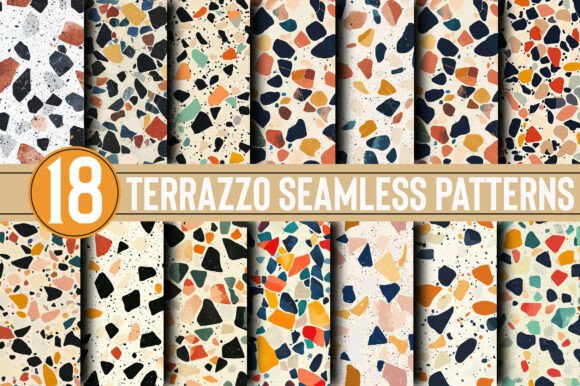
Unlocking the Modern Aesthetic: A Guide to Terrazzo Patterns
In the landscape of contemporary design, we are constantly seeking textures and elements that bridge the gap between the digital world and tangible reality. Enter Terrazzo Patterns, a versatile set of design assets that captures the eclectic, speckled charm of traditional terrazzo flooring but reimagines it for the modern digital creator. This collection isn't just about a random scattering of chips; it is a curated aesthetic that brings personality, depth, and a distinctively "lived-in" feel to any project. Whether you are a graphic designer, a small business owner, or a passionate crafter, understanding how to utilize these patterns can significantly elevate your visual output.
The Visual DNA of Terrazzo Patterns
At its core, the appeal of this collection lies in its ability to balance chaos and order. The visual characteristics of Terrazzo Patterns are defined by organic, irregular shapes—often geometric but softened at the edges—suspended within a cohesive background. This specific set offers 18 distinct designs, available in both Solid Color and Distressed Effect variations. The solid versions provide a crisp, modern look perfect for professional branding where clarity is paramount. Conversely, the distressed effects introduce a layer of texture and grit, ideal for projects that require a vintage, hand-crafted, or edgy vibe.
The "personality" of these patterns is inherently playful yet sophisticated. Unlike rigid geometric grids, terrazzo feels organic and dynamic. It suggests movement and creativity. Because the files are delivered as high-resolution PNGs with transparent backgrounds, they act as versatile design assets rather than just static backdrops. You can layer them over photography, use them as masks, or integrate them as standalone graphics. This flexibility makes them a powerful tool in your creative font and asset library, allowing for seamless integration into complex compositions without the hassle of removing unwanted backgrounds.
Strategic Applications: From Brand Identity to Product Design
When it comes to practical application, the versatility of Terrazzo Patterns is unmatched. For those involved in brand identity and logo design, these patterns offer a way to stand out in a saturated market. A terrazzo texture can serve as a background for a business card, adding tactile depth that flat colors simply cannot achieve. For a tech startup or a lifestyle brand, using a clean, solid terrazzo pattern behind a sans serif font creates a modern, approachable aesthetic. Alternatively, pairing a distressed terrazzo texture with a script font or handwritten font can evoke a sense of artisanal craftsmanship, perfect for bakeries, boutiques, or boutique agencies.
Beyond the screen, these assets are a goldmine for physical product creators. If you are in the print-on-demand space, the applications are endless. Imagine the visual hierarchy of a t-shirt design where a terrazzo cluster frames a witty slogan printed in a bold display font. The texture adds visual interest without overpowering the text. This extends to packaging design as well. A coffee bag or a candle box featuring a subtle terrazzo background communicates a premium, trendy quality to the consumer.
- DIY & Crafting: Use these 300 dpi files to create vibrant stickers, custom phone cases, or unique tumblers. The high resolution ensures that even when scaled, the edges of the "chips" remain sharp and professional.
- Editorial Design: In editorial design, such as magazine layouts or blog headers, terrazzo patterns can be used to break up heavy text blocks, guiding the reader's eye and adding a splash of color.
- Social Media Graphics: For marketers and content creators, these patterns are perfect for social media graphics. They create an energetic backdrop for quotes, announcements, or sale promotions, ensuring your content stops the scroll.
Integrating Texture into Your Typographic Workflow
While Terrazzo Patterns are graphical elements, their interaction with typography is where the magic happens. As a designer, you know that visual hierarchy is about guiding the viewer's eye. A busy terrazzo pattern can compete with a complex serif font or an intricate script font. Therefore, testing is crucial.
A practical recommendation is to use these patterns as "breathing room" elements. If you have a headline set in a heavy display font, try placing a terrazzo graphic nearby to balance the visual weight, rather than placing the text directly on top of it. If you must overlay text, ensure high contrast. A white distressed terrazzo pattern over a dark background works beautifully with black or white bold typography. This approach maintains readability while leveraging the texture to enhance the brand perception as being modern and stylish.
Furthermore, consider the consistency of your project. If you are building a web design layout, you might use the solid terrazzo patterns for background sections and the distressed versions for accent graphics like icons or dividers. This variation keeps the design interesting without fragmenting the visual identity. The goal is to use these premium font companions to tell a cohesive story, ensuring that the texture supports the message rather than distracting from it.
Technical Excellence and Workflow Efficiency
One of the most significant advantages of this specific collection is its technical specifications. Delivered at 300 dpi (12x12 inches) and 3600x3600 px, these files are print-ready. You do not need to worry about pixelation when transferring these designs to physical media like mugs, bags, or framed artwork. This level of quality is essential for professional commercial font and asset usage, ensuring your final product looks polished.
The inclusion of the transparent background cannot be overstated. In a busy workflow, the ability to drag and drop a pattern onto a canvas without needing to mask out a white box saves valuable time. It allows for instant layering over complex color palettes or photographs. For the entrepreneur or crafter, this efficiency means you can prototype designs faster and get products to market sooner.
While the digital nature of the product means colors may vary slightly between monitors—a standard caveat in digital design—the quality of the files provides a reliable baseline. Whether you are using these for modern typography projects, packaging design, or simple DIY crafts, the assets are built to perform. By integrating Terrazzo Patterns into your toolkit, you are not just adding a trend; you are adding a timeless texture that adapts to the evolving needs of visual communication.