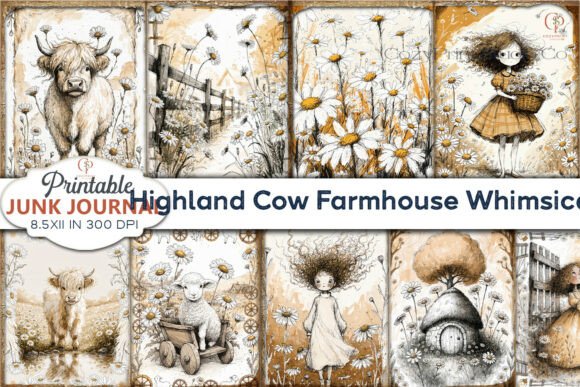
Highland Cow Farmhouse Whimsical Junk: A Designer's Guide
Unpacking the Visual Character of This Unique Typeface
The Highland Cow Farmhouse Whimsical Junk font is more than just a collection of letters; it's a full sensory experience translated into typography. At its core, it embodies a rustic, handcrafted aesthetic that immediately evokes feelings of warmth, nostalgia, and countryside charm. The visual character is defined by its irregular, slightly uneven baseline and the subtle texture within each glyph, mimicking the look of lettering pressed onto aged paper or wood. It’s a display font with a strong personality, designed to be a statement piece rather than a workhorse for body text. The strokes have a natural, organic flow, avoiding the harsh precision of a sans serif font. This gives it an authentic, almost handwritten font quality, but with enough structure to remain legible at larger sizes. The overall appeal lies in its ability to add instant character and a storybook quality to any project, making it a powerful creative font for designers looking to inject personality into their work.
Where This Font Truly Shines: Practical Applications
Understanding a font's personality is one thing; knowing where to deploy it is another. The Highland Cow Farmhouse Whimsical Junk typeface excels in contexts where warmth, approachability, and a touch of whimsy are desired. In brand identity, it's a natural fit for artisan bakeries, boutique farms, cozy cafes, handmade craft brands, or any business wanting to project a down-to-earth, authentic image. For logo design, it can create an unforgettable mark that feels personal and unique, especially when paired with simple sans serif fonts for supporting text.
Beyond branding, its applications in editorial design and packaging design are extensive. Imagine it on the cover of a cookbook, the header of a lifestyle blog, or the label of a small-batch jam jar. It brings a tactile, story-like quality that engages readers on an emotional level. In the digital realm, it’s a fantastic choice for social media graphics, particularly for quotes, announcements, or sale banners that need to stand out in a crowded feed. For web design, it should be used sparingly—think large hero text or featured section headers—to avoid compromising site speed and readability. Its true strength, however, lies in print design and physical paper crafts, where its textured details can be fully appreciated.
Leveraging the Font for Impact and Engagement
The strategic use of a premium font like Highland Cow Farmhouse Whimsical Junk can significantly influence how an audience perceives a message. Its inherent style directly impacts visual hierarchy. By using it for headlines or key phrases, you instantly guide the viewer’s eye and establish a clear focal point. This font doesn’t just display words; it sets a mood. The farmhouse whimsy can make a brand feel more approachable and trustworthy, which is a cornerstone of positive brand perception. For marketers and content creators, this emotional resonance can lead to better audience engagement, as the design feels less corporate and more human.
However, with a font this distinctive, consistency is key. Using it across all touchpoints—from your website headers to your invoice templates—builds a cohesive and professional brand world. The challenge lies in maintaining that consistency without overwhelming the viewer. This is where a thoughtful font pairing strategy becomes essential. Pairing it with a clean, neutral serif font for body copy or a simple geometric sans serif font for secondary information creates balance. The whimsical display font captures attention, while the paired typeface ensures the supporting information is easy to digest. This combination enhances readability and strengthens overall visual hierarchy, making your design both beautiful and functional.
A Practical Checklist for Using This Creative Asset
Before integrating any new design asset, a practical evaluation is necessary. First, consider the project's tone. Is it serious, luxurious, or technical? If so, this font may not be the right typeface. Its strength is in warmth and whimsy. Second, test it in context. Mock up a headline or logo. Does it align with the other visual elements? Does it complement your imagery? Third, rigorously test font pairings. Create a style tile with your primary (Highland Cow), secondary, and body fonts to ensure they work harmoniously without competing for attention.
Always review the full character set. Does it include the necessary punctuation, numerals, and language support for your audience? For commercial projects, verifying the commercial font license is non-negotiable. Ensure the license covers your intended use, whether for a client’s logo, a product for sale, or a marketing campaign. Finally, conduct a readability test at various sizes, especially for any text that will be read in paragraphs or at a distance. While it’s a display font, the most whimsical variants can still be challenging at small sizes. By following these steps, you move from simply choosing a pretty font to strategically deploying a powerful tool for visual communication.